(872) 316-6769

Bathroom & shower tile in Chicago, IL

A bathroom has to handle water, daily movement, and close inspection. We install floor, wall, and shower tile with attention to the substrate, drainage, layout, and finish details that make the room comfortable to use. The right assembly depends on the conditions, chosen tile, and manufacturer instructions.

(872) 316-6769
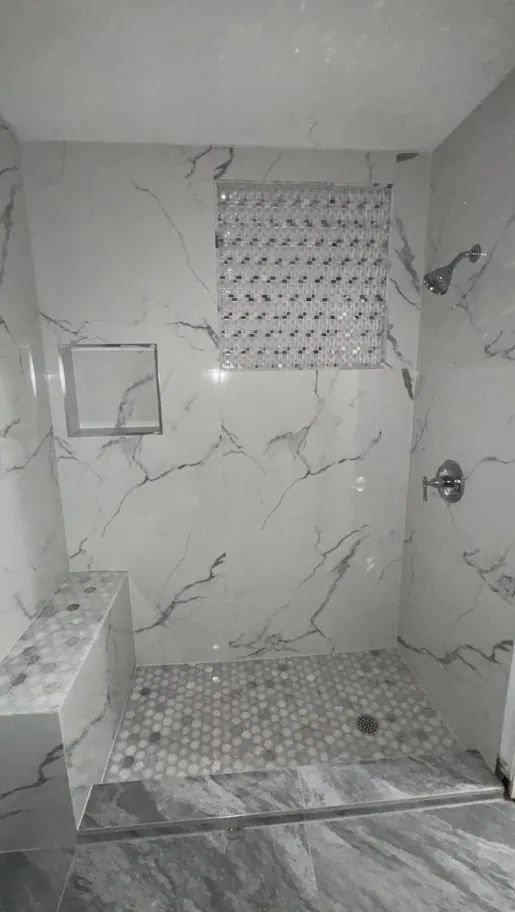
Shower with white gray-veined wall panels, a built-in bench, a mosaic feature inset, and a rounded pebble floor.

A considered tile assembly, not just a surface

Bathroom tile starts below the visible finish. We assess framing, existing layers, transitions, and the condition of the floor or wall before recommending a sequence. In a bungalow, two-flat, or Prairie-style home, that may mean working around older dimensions, uneven framing, or a heated floor. We discuss those conditions plainly before tile is ordered or installed.

For showers, the waterproofing system, pan, curb, niches, and benches need to work together. Tile and grout are the finish; they are not the waterproofing. We follow the selected system's instructions, allow for movement, and plan penetrations and edges so the finished enclosure can be cleaned without awkward traps for water or soap.

From the first measure
to the last joint

A good finish begins before the first tile.

Assess the room

We review the bathroom's use, access, ventilation, plumbing locations, substrate, framing, and existing finish. We check for deflection and practical flatness rather than assuming an old floor or wall is ready for tile. If removal reveals damaged material, we pause to discuss the next appropriate repair.
Plan the assembly

We select compatible backer, membrane, mortar, grout, sealants, and movement details for the tile and location. Shower pans, drains, niches, benches, thresholds, and heated-floor components are coordinated before setting begins. Product instructions and site conditions control the final method.

Prepare and protect

Removal is organized with dust containment, protected paths, and careful handling of fixtures where practical. We look for sound, clean, sufficiently flat surfaces and correct high or low areas within the limits of the assembly. Any suspected hazardous material is left for qualified assessment rather than disturbed casually.

Set with a clear layout

We dry-plan important walls and floors around drains, corners, doors, niches, plumbing trim, and visible sightlines. Tile is set with the specified mortar coverage, joint width, and movement accommodation. Large-format pieces receive particular attention to support, lippage, and transitions.

Finish and review

After cure times are respected, we complete grout, flexible joints, trim, sealants, and final cleaning according to the selected products. We review shower and floor care, drying habits, and any stone-specific needs, then leave the room ready for its next stage of use.

Materials and surfaces
we work with

Tile, setting materials, and substrate need to work as one system.

Ceramic

Ceramic wall tile can suit bathroom walls, backsplashes, and other areas when its water exposure, absorption, finish, and installation instructions fit the location. We plan edges and trim so the pattern ends deliberately at doors, corners, and fixtures.

Porcelain

Porcelain is often selected for floors and wet-area walls because of its dense body and broad range of finishes. We still match the tile to the intended use, traction needs, size, substrate, and mortar system rather than treating every porcelain tile as interchangeable.

Large-format porcelain

Large-format porcelain can give a bathroom a quieter field of joints, but it places more demands on flatness, handling, coverage, and layout. We check the setting surface, use suitable support, and plan cuts around drains, niches, benches, and small wall interruptions.

Natural stone

Marble, limestone, slate, and other natural stone bring variation that should be reviewed before installation. Porosity, thickness, warpage, movement, sealing, and cleaning requirements affect the assembly. We discuss sample variation and ongoing care before stone is committed to a wet room.

Mosaic

Mosaics can follow shower floors, curves, niches, and accent bands, but sheet-mounted pieces need careful alignment and full support. We account for joint lines, drain placement, slope, and transitions so the small format reads as an intentional part of the room.

Glass

Glass tile needs compatible mortar, coverage, grout, and finishing details suited to its transparency and surface. We review manufacturer guidance for the specific product and avoid allowing adhesive color, uneven backing, or movement at edges to undermine the finished appearance.

Shower waterproofing and drainage

A durable shower begins with a continuous water-management plan. We coordinate the wall waterproofing with the pan, curb, corners, seams, niches, benches, valve penetrations, and drain. The sloped surface must direct water toward the drain, while the tile and grout are installed over a properly prepared system. We do not substitute surface caulk or grout for waterproofing, and we do not promise that a repair is suitable before the concealed conditions are understood.

Niches and benches deserve early attention because they change framing, waterproofing, slope, and tile cuts. We keep ledges pitched so water does not sit, use flexible sealant at changes of plane where required, and leave movement joints where the assembly calls for them. A shower that looks simple from the doorway can still require careful sequencing behind the tile.

Older homes, heated floors, and everyday access

River Forest includes homes in styles such as Prairie School, Tudor Revival, and bungalow architecture, according to the Village's historic-preservation information. A bathroom update in an older home may need a measured response to existing trim, thresholds, floor heights, and room proportions. If a property is subject to local review, the owner should confirm applicable requirements with the Village before work begins; tile installation does not replace that responsibility.

Heated floors require compatible components, planned sensor and cable locations, correct encapsulation, and a surface that meets the tile system's flatness and cure requirements. We coordinate the floor buildup with doors, cabinetry, toilets, and transitions. For homes and small commercial bathrooms, we also discuss access, staging, cleaning durability, and how the room will stay usable around the work.

Keep the room dry and clean

Use a neutral cleaner appropriate for the tile and grout, and remove soap residue before it builds up. In a shower, a squeegee or soft towel can reduce standing water on glass and ledges. Keep the room heated and reasonably dry during ordinary use, and make sure ventilation is used after bathing. Winter salt and grit brought into a bathroom can scratch some finishes, so sweep rather than dragging abrasive debris across the floor.

Natural stone needs product-specific care. Do not use acidic cleaners on susceptible stone or assume a sealer makes stone stain-proof. Follow the stone, grout, sealant, and membrane manufacturers' directions, and ask about resealing only when the material and product require it.

What shapes the estimate

Bathroom and shower tile work is scoped after we understand the room, access, removal needs, substrate, waterproofing, tile format, layout, and finish details. A straightforward floor and a complete shower enclosure can look similar in a photo while requiring very different preparation and sequencing. We separate visible tile work from concealed assembly decisions so the scope remains readable.

For a useful conversation, share the room's approximate dimensions, photos of the current conditions, the tile or fixture direction if known, and whether the space includes a pan, niche, bench, or heated floor. Any recommendation remains subject to field conditions, selected products, and their installation instructions; we do not force a material or promise an outcome before assessment.

Where we work

Map of the ten towns we serve around River Forest, ILRiver ForestHome baseOak ParkForest ParkBerwynCicero

River Forest is our home base. Point at a town to see how far it is.

Based in River Forest. Working in the homes and everyday spaces of Chicago’s western neighborhoods and suburbs.

Good questions

Can you tile over the existing bathroom tile?

Sometimes, but only when the existing surface and assembly are sound, sufficiently flat, clean, compatible, and appropriate for the added height. We check transitions, plumbing trim, doors, and substrate conditions first. Removal may be the better choice when layers are loose, damaged, contaminated, or hiding a waterproofing problem.

Does shower tile make the shower waterproof?

No. Tile and grout protect and finish the surface, but the waterproofing system behind or beneath them manages water. The pan, walls, corners, niches, benches, penetrations, and drain must be designed as one compatible assembly and installed according to the selected system's instructions.

How do you handle an uneven bathroom floor?

We identify high and low areas, deflection, and the source of movement before choosing preparation. Depending on the condition, the solution may involve repair, leveling, underlayment, framing adjustment, or a different tile format. We do not use extra mortar as a substitute for a suitable, prepared setting surface.

Can you install tile over a heated floor?

Heated-floor systems can work below tile when the heating product, underlayment, mortar, tile, and controls are compatible. We coordinate the buildup, sensor placement, movement details, cure periods, and finish heights. The heating manufacturer and the tile assembly instructions govern the installation and initial operation.

What happens if removal exposes damaged material?

We contain dust, protect surrounding areas, and document what is visible. Suspected hazardous materials are not casually disturbed and may require qualified assessment. We then discuss substrate repair, leveling, replacement, or a revised sequence before covering the condition.

How should I care for a new shower or bathroom floor?

Use the cleaner recommended for the tile, grout, and any stone, and avoid abrasive or acidic products unless the manufacturer says they are suitable. Ventilate after bathing, remove standing water where practical, and watch flexible joints and sealants as part of ordinary maintenance.

A good finish starts with a conversation.

Tell us about the room, the tile, and what you have in mind.

(872) 316-6769